Wales and Slate: How to Care for a Welsh Slate Roof
If you own an older Welsh home, there's a fair chance your roof is slate. Run your hand along one of those thin grey slabs and you're touching a piece of Welsh history. Slate roofed this country for generations, and plenty of those roofs are still going strong today.
But a slate roof isn't a fit-and-forget thing. Look after it and it can outlast you. Neglect it and small faults turn into expensive ones.
The quick answer: Welsh slate is tough, long-lasting, and well worth protecting. The best care is gentle. Keep moss off with low-pressure cleaning, clear your gutters, and never blast old slate with a pressure washer. Done right, a slate roof can last a century or more.
1. Wales once roofed the whole world
Back in the 1800s, slate from North Wales ended up on rooftops far beyond Wales itself. The great quarries near Bethesda and Llanberis, along with the slate town of Blaenau Ffestiniog, turned out enormous amounts of it. Penrhyn Quarry near Bethesda grew into one of the largest slate quarries anywhere on earth.
That slate travelled. It covered homes across Britain and shipped out to cities around the world. In 2021, UNESCO recognised the Slate Landscape of Northwest Wales as a World Heritage Site, which tells you just how much this trade mattered.
So if your roof is Welsh slate, it comes from real heritage. That's worth caring for.
2. Why slate lasts so long
Slate is a natural stone that splits into thin, flat sheets. It doesn't rot, it doesn't rust, and it shrugs off sun and frost far better than most materials. That's the whole reason it became the roof of choice across Wales.
A well-laid Welsh slate roof can last a hundred years or more. Some of the slate roofs still in service today were laid before your grandparents were born.
The slate itself often outlives the nails and battens holding it up. That's a key point, and we'll come back to it.
3. Moss and damp are the real threat, not age
Slate doesn't usually fail because it's worn out. It fails because of what grows on it and gets under it. In the Welsh climate, moss and algae settle on slate fast, and that green layer holds water right against the stone.
Trapped damp works into the tiny gaps and, on frosty nights, freezes and expands. Over many winters that pressure can flake the face off a slate or push slates loose.
Keep the moss down and you take away most of that risk. Simple as that.
4. Why old slate can't take a pressure washer
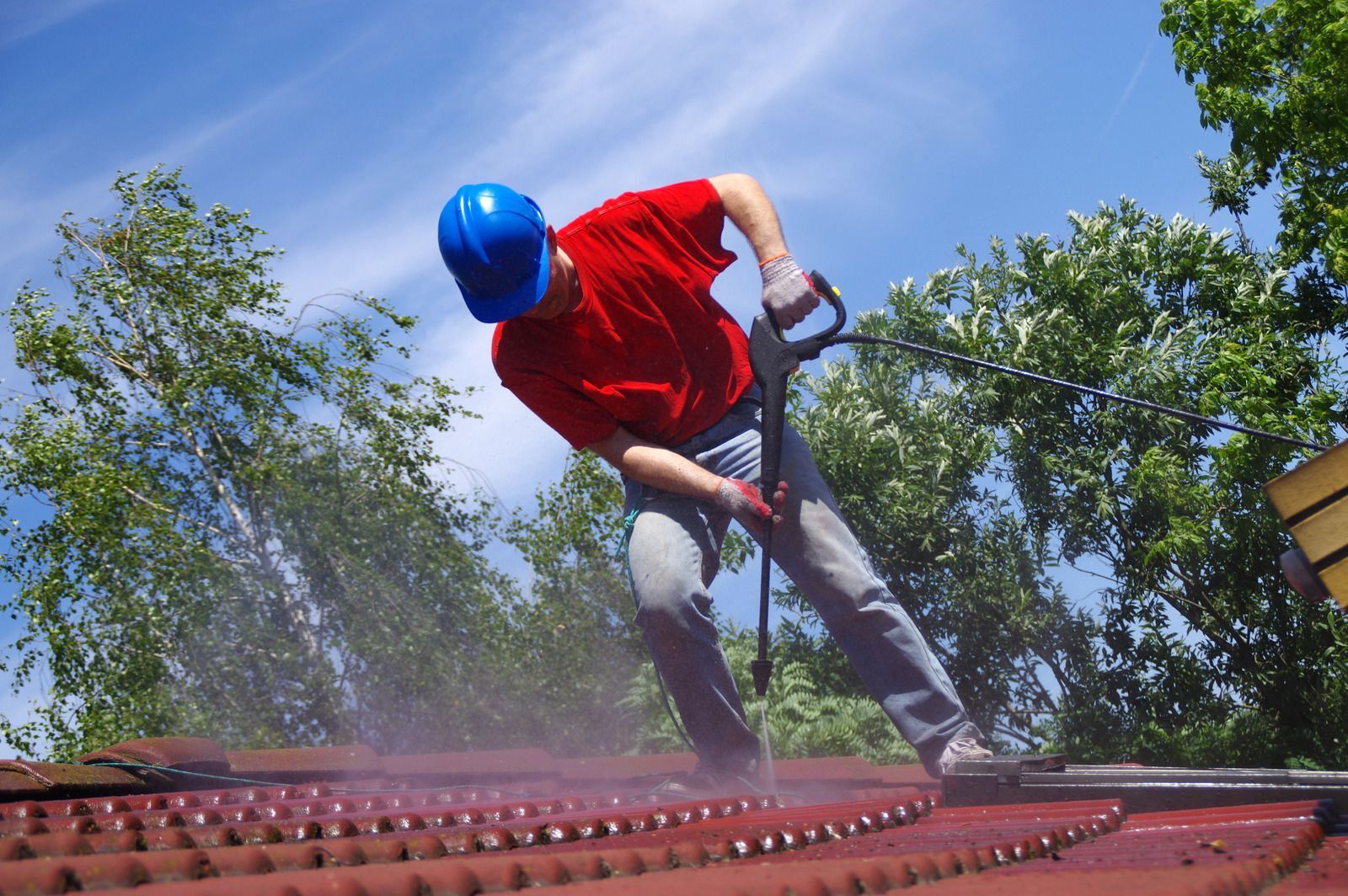
Here's a mistake I see far too often. Someone hires a pressure washer, points it at their slate roof, and blasts away. It looks great for a week. Then the trouble starts.
High-pressure water can strip the smooth face off aged slate, force water up under the courses, and knock old slates clean off. On a heritage roof that's a costly bit of damage. A soft wash, using low pressure and a biocide, is the gentle way to clear moss without wrecking the slate. And for old Welsh slate, gentle is exactly what you want.
The biocide keeps doing its job after the water has gone, slowing regrowth for months. That's the sensible route for slate you'd like to keep for decades.
5. Gutters and slate work as a pair
When moss breaks off a slate roof, it doesn't vanish. It slides down and collects in your gutters. In a wet country like Wales, that build-up happens quickly, and blocked gutters send water spilling down your walls instead of away from the house.
That overflow keeps the base of your roof and your walls damp, which feeds even more moss. It's a loop. Clearing your gutters is part of looking after the slate above them.
Roof cleaning and gutter cleaning really do belong together. One without the other only does half the job.
6. Catch slipped and broken slates early
Every so often, glance up at your roof from the garden or the street. A slate that's slipped out of line, a gap in the pattern, or a few slates on the ground after a storm are all signs worth acting on.
Welsh weather is hard on roofs, and the fixings can weaken long before the slate does. A single missing slate lets water straight into the roof structure.
Here are the signs that your slate roof wants a proper look:
- Slipped slates: any slate sitting lower or crooked next to its neighbours.
- Gaps in the pattern: dark spaces where a slate has gone missing.
- Bits of slate on the ground: fragments in the garden usually mean something's come loose above.
- Thick moss along the joints: heavy green growth holding damp against the stone.
- Damp patches indoors: stains on upstairs ceilings often trace back to a failed slate.
Frequently Asked Questions
How long should a Welsh slate roof last?
Genuine slate can last a century or more when it's looked after. Often the nails and battens give out before the slate itself does.
Is it safe to clean moss off a slate roof?
Yes, as long as it's done gently. A low-pressure soft wash lifts moss without harming the slate, unlike a high-pressure jet.
Why not just pressure wash it?
Pressure washing can strip aged slate, dislodge slates, and drive water under the roof. On old Welsh slate it does more harm than good.
Can you clean moss off without walking all over the slate?
Good practice is to avoid loading fragile slate wherever possible. The soft wash approach lets the roof be treated with minimal disturbance.
Do you cover slate roofs across Wales?
Yes. Ben's Roof Cleaning works with slate and tiled roofs right across Wales, from the north coast to the southern valleys.
Got an old slate roof that needs some care?
Ben's Roof Cleaning works across Wales, with over 15 years of experience. Get in touch or call 07889 127153
for a free, no-obligation quote.
A slate roof is worth keeping, so treat it gently
Welsh slate earned its name the hard way, roofing homes here and around the world for well over a century. The roof on your house is part of that story, and with a bit of care it can keep doing its job for decades more.
The trick is a light hand. Keep the moss down with gentle cleaning, keep the gutters clear, and deal with slipped slates before the weather gets in. Do that, and your slate stays exactly where it belongs.